
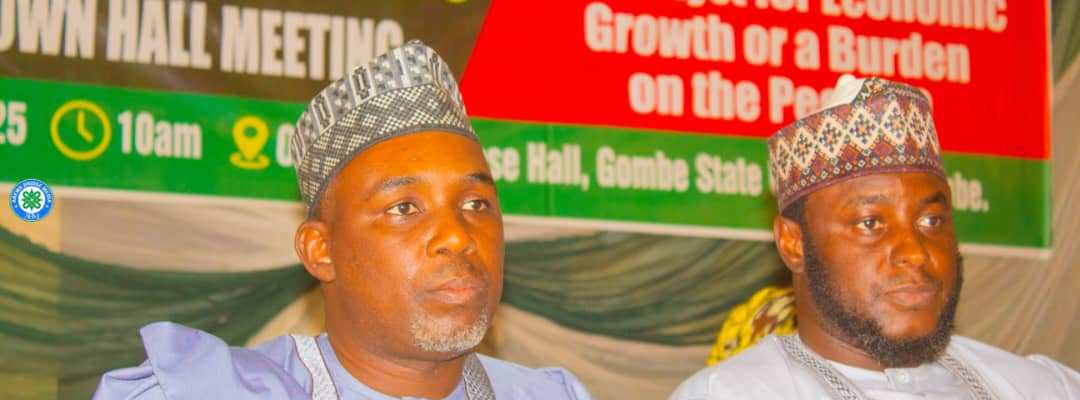
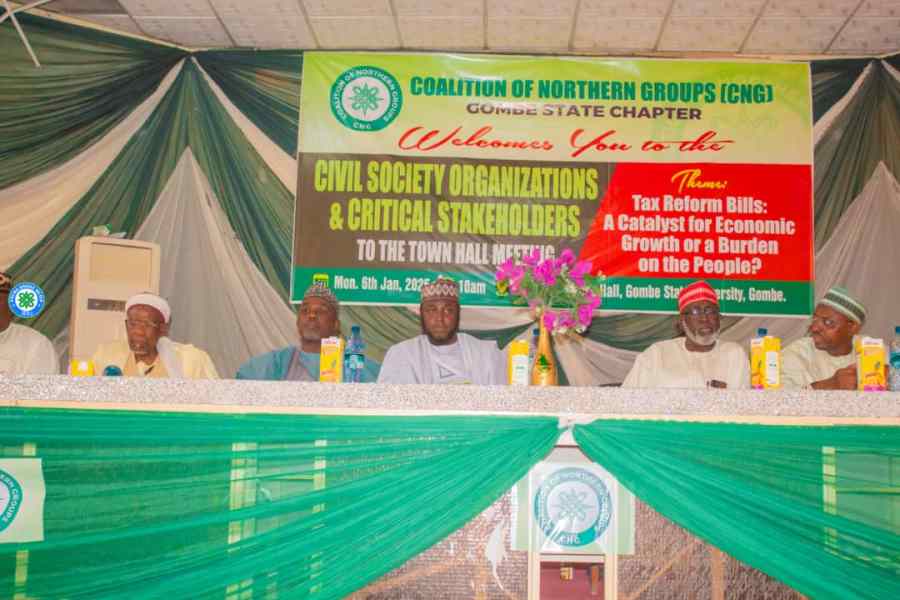
A recent town hall meeting convened by the Coalition of Northern Groups (CNG) Gombe State Chapter, in collaboration with Civil Society Organizations (CSOs) and critical stakeholders, has unequivocally rejected the proposed Tax Reform Bills. The meeting, held at Gombe State University on January 6, 2025, brought together policymakers, academics, civil society actors, community leaders, youth groups, and concerned citizens to deliberate on the implications of the proposed tax reform bills.
Comrade Muhammed Usman Deba, Gombe State Coordinator of the CNG, emphasized that the proposed tax reform bills would exacerbate existing economic challenges in Northern Nigeria.
“The reforms are likely to deepen poverty, increase unemployment, and stifle local businesses already grappling with economic hardship,” he noted.
The participants also expressed concern over the provisions in the bills that propose the defunding of pivotal national institutions such as the Tertiary Education Trust Fund (TETFUND), the National Information Technology Development Agency (NITDA), and the National Agency for Science and Engineering Infrastructure (NASENI).
Comrade Habiba Isah Gaude, representative of women groups from the Voice for Rural Women, stressed that these institutions are critical to education, innovation, and technological advancement in Northern Nigeria.
“It is unacceptable that the proposed tax reform bills would defund these institutions, which are essential for the development of our region,” she said.
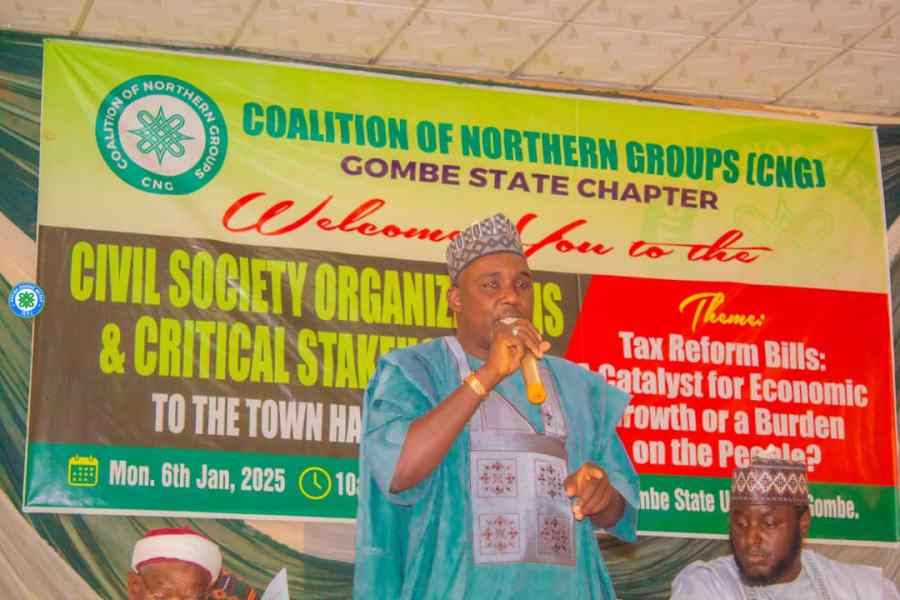
The town hall meeting further criticized the lack of meaningful consultation and engagement with stakeholders, particularly those from Northern Nigeria, during the formulation of the bills. Comrade Lawal Idris Lawantee, Acting Chairman of CSOs in the state, warned that the implementation of such reforms could fuel discontent and add to social tensions in the North.
“The Federal Government must engage in broader consultations and consensus-building among stakeholders to ensure that the tax reform bills reflect the needs and realities of all regions,” he emphasized.
In light of these concerns, the town hall meeting made several recommendations. Firstly, it demanded the relocation of all bank headquarters to Abuja, citing the need for equitable distribution of benefits. “Abuja, as the Federal Capital of Nigeria, has historically been a peaceful and neutral territory free from ethnic or religious tensions,” the meeting noted.
“It is unjust for banks to situate their headquarters in certain states and allow those states to disproportionately benefit at the expense of contributions from other regions,” Comrade Deba added.
The meeting also called for the reopening of land borders, reduction of VAT to 3%, and rejection of increased telecommunication tariffs. Furthermore, it demanded increased funding for TETFUND, NITDA, and NASENI, and clear definitions of key terms in the tax reform bill.
“The proposed tax reform bills are a direct assault on the economic and social well-being of Nigerians, particularly in Northern Nigeria,” Comrade Gaude said. “We demand alternative reforms that are inclusive, equitable, and designed to stimulate sustainable economic growth without imposing undue hardship on citizens.”
The participants unanimously rejected the proposed tax reform bill, emphasizing the need for the Federal Government to adopt a more inclusive and people-centered approach to economic reforms.
As the Federal Government moves forward with economic reforms, the town hall meeting’s recommendations serve as a critical reminder of the need for inclusivity, equity, and people-centered policies. The meeting’s conclusions underscore the collective sentiment that the proposed tax reform bills, in their current form, are detrimental to the people and the nation at large.
“The Federal Government must listen to the voices of the people and take urgent steps to address these pressing concerns,” Comrade Lawantee emphasized. “We will continue to engage with policymakers, mobilize citizens, and advocate for the protection of critical institutions and economic fairness.”
 Green Africa News